
# How Custom Educational Games Transform Employee Training
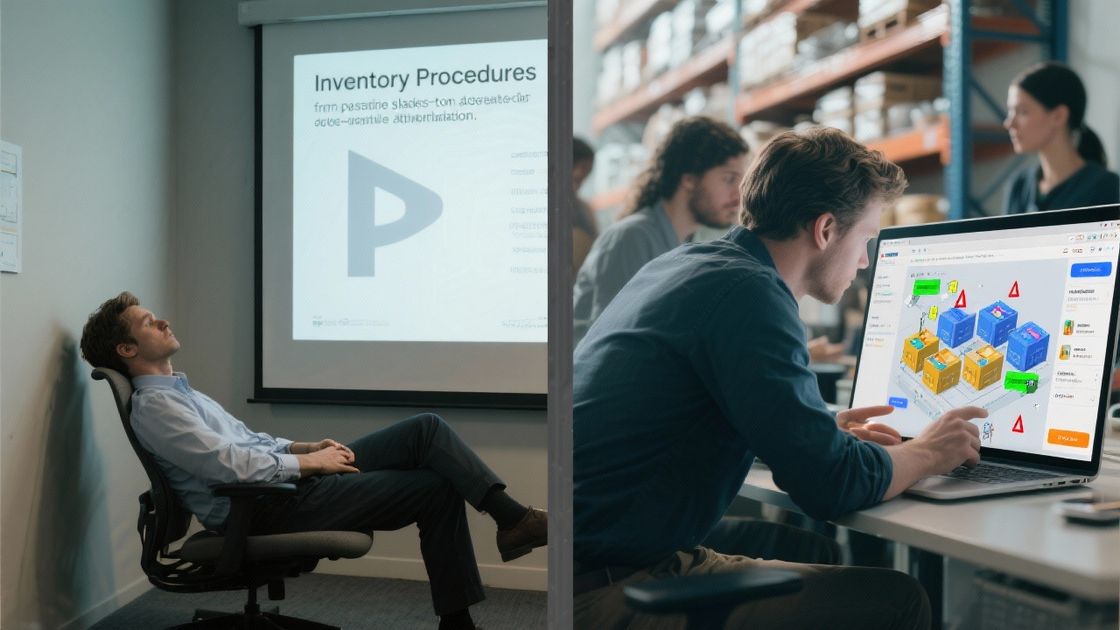
Your new hires sit through hours of PowerPoint presentations. They nod at the right moments. They take notes they will never read. Three weeks later they make the same mistakes the training was meant to prevent.
This happens because slides demand passive attention. People watch information go past. They don't process it deeply. Most of what they saw fades within days.
Custom educational games force active engagement. People make decisions. They see consequences. They learn through doing. The knowledge sticks because the brain treats it differently.
Why Training Often Falls Short
Slide decks present information in sequence. New hires absorb what they can. They miss things when their attention drifts. They can't practise applying the concepts. They leave training with theoretical knowledge that struggles under pressure.
Complex procedures get explained with diagrams and bullet points. The trainer walks through each step. New hires understand it in that moment. When they need to do it themselves weeks later, the memory has faded.
Your metrics show this. Training completion rates look fine. Performance gaps appear later. The difference between what people were taught and what they actually learned becomes obvious when real work begins.
What Educational Games Actually Do
A training game presents scenarios that mirror real work situations. New hires make choices. The game shows what happens. They learn cause and effect through direct experience.
This means rebuilding the training around active problem solving. The game mechanics create situations where people must apply knowledge to succeed.
A retail company needed staff to learn their inventory management system. Traditional training involved watching demonstrations and reading manuals. A custom game put trainees in charge of a simulated store. They handled deliveries, managed stock levels, processed returns. They made mistakes in the game that would have cost money in reality. They learned the system by using it in a risk-free environment.
The Retention Difference
People remember experiences far better than information. Playing through a scenario creates a memory that sticks. Reading about the same scenario creates weak retention.
A logistics company compared two onboarding groups. Half received traditional slide-based training. Half used a custom game covering the same material. They tested both groups immediately after training. Scores were similar. They tested again three months later. The game-trained group retained 65% more information.
The game group also made fewer operational errors during their first six months. The training produced better long-term outcomes because the learning happened through doing.
Complex Procedures Need Practise
Some jobs involve procedures with dozens of steps. Medical protocols. Safety checks. Quality control processes. Getting these wrong causes serious problems.
Traditional training walks people through the steps. They understand the logic. They still make mistakes when performing the procedure under pressure. They need practise to build automaticity.
Games provide that practise. A manufacturing company built a training game for their quality inspection process. Inspectors worked through hundreds of simulated products. They learned to spot defects quickly. The game tracked common mistakes. Training focused on areas where people struggled. Error rates during actual inspections dropped by 40% compared to previous training methods.
Engagement Drives Better Learning
When trainees stay focused, they learn more. They process the information being taught. The training time delivers real value.
Games command attention naturally. People want to see what happens next. They want to improve their performance. This engagement means they actually process the information being taught.
A financial services company measured attention during onboarding. Slide-based sessions saw attention drop after 15 minutes. Game-based sessions maintained high engagement for 45 minutes. The games covered more material in less time because people stayed focused.
When Games Work Best
Training games make sense for complex procedures that new hires need to master. Safety protocols. Technical systems. Customer service scenarios. Anything where understanding comes from doing.
Simple information transfer works fine in traditional formats. Company history. Benefits enrolment. Basic policies. Games would add unnecessary complexity to these topics.
Games also work well for soft skills training. Difficult conversations. Conflict resolution. Sales techniques. These skills improve through practise. Games provide that practise without the awkwardness of role-playing with colleagues.
Building Effective Training Games
You need clear learning objectives before development starts. What specific skills or knowledge does the game need to teach. How will you measure whether people learned it. What does success look like.
The game mechanics must match the learning goals. A game teaching decision-making skills needs branching scenarios with consequences. A game teaching procedures needs step-by-step processes with immediate feedback. The gameplay should reinforce what you want people to learn.
Development takes time. Simple games need six to eight weeks. Complex simulations need three to six months. Budget accordingly. Expect to spend five to twenty-five thousand pounds depending on scope and sophistication.
Technical Considerations
Browser-based games work across all devices. No installation required. Easy to update when procedures change. This matters more than people realise. Training materials need updates. Browser games update once and everyone sees the changes immediately.
Mobile compatibility matters for field staff. Warehouse workers. Retail employees. Delivery drivers. They train on tablets or phones. Your game needs to work on small screens.
Analytics should track everything. Time spent on each section. Common mistakes. Success rates. This data shows which parts of your training work and which need improvement. You can see where people struggle before they ever reach the job.
The Investment Reality
Custom training games cost more upfront than slide decks. They save money long term through better outcomes. Fewer mistakes. Faster time to competence. Less need for retraining.
Calculate your current training costs. Include trainer time. New hire wages during training. Lost productivity. Mistakes made during the learning period. Now consider what a 30% improvement in training effectiveness would save.
One company spent fifteen thousand pounds developing a training game. They onboarded 200 people per year. The improved training cut their mistake-related costs by forty thousand pounds annually. The game paid for itself in four months.
Measuring Training Effectiveness
Track performance metrics after training. Error rates. Time to full productivity. Customer satisfaction scores. Support tickets raised by new hires. These numbers show whether your training actually works.
Compare game-trained staff against traditionally trained staff. Look at their performance three months out. Six months out. A year out. The differences tell you whether the investment pays off.
Survey new hires about their training experience. Ask what helped them learn. Ask what confused them. This qualitative feedback matters as much as the numbers. People know which parts of training actually prepared them for their job.
When Traditional Formats Serve You Better
Some content belongs in traditional formats. Reference material. Detailed specifications. Legal compliance information. These need to be searchable and printable. Games work poorly for this.
Very small teams might find custom game development challenging to justify. If you onboard five people per year, the cost-benefit calculation changes. Traditional training with thorough hands-on practise might serve you better.
Some learners genuinely prefer traditional instruction. Know your audience. Build training that matches their preferences when possible.
The Implementation Process
Start with one training module. Pick something where traditional training consistently falls short. Build a game for that specific problem. Measure the results carefully. Expand to other topics if it works.
Get buy-in from trainers before launch. Some see games as a change to their role. Make clear that games supplement their work. Good trainers become facilitators who help people learn from the game experience.
Plan for iteration. Your first version will have room for improvement. People will find ways to game the system. Scenarios will miss important edge cases. Budget time and money for improvements based on real usage.
Making the Decision
Ask whether your current training produces the outcomes you need. Ask whether new hires make preventable mistakes. Ask whether people forget what they learned within weeks.
If training effectiveness matters and traditional methods fall short, games might solve the problem. The upfront investment pays off through better-prepared employees who make fewer costly mistakes.
Educational games work best when training complexity demands active practise. Simple information transfer needs simple delivery. Complex skills need experiential learning. Match your training method to what you're teaching.
Your training slides will always be cheaper to create. They'll cost you more long term through mistakes and retraining. The choice comes down to whether you value upfront cost savings or long-term training effectiveness.
Let people learn by doing. The performance difference shows up in every metric that matters.