
HR directors hear about gamification constantly. Add points to your training programme. Turn sales targets into a competition. Make work feel like a game and watch engagement soar.
Here's what actually happens. Game mechanics can drive genuine improvements in business outcomes when you apply them to the right problems in the right way. Getting this right requires understanding what games actually do and why they work.
What Game Mechanics Actually Do
Games create feedback loops. You take an action. You see the result immediately. You adjust your next action based on what you learned. This cycle repeats rapidly.
Games also provide clear goals and measurable progress towards those goals. You always know where you stand. You can see yourself improving.
These two elements drive engagement. Immediate feedback and visible progress. Everything else is decoration.
Understanding Where This Approach Works Best
Some applications of game mechanics miss the mark entirely. Sales teams already compete naturally. Adding a point system creates administrative overhead without changing behaviour. Mandatory compliance training with badges added still feels like mandatory compliance training.
The real opportunity lies in solving specific workplace challenges. Operations teams struggle with complex procedures people only perform occasionally. Medical equipment sterilisation protocols. Emergency response procedures. Financial audit checklists. People forget steps because they don't do these tasks daily.
A gamified training system that simulates these procedures changes the dynamic entirely. Staff can practise the full procedure virtually. They get immediate feedback when they miss a step. They can repeat the simulation until the process becomes automatic.
One hospital used this approach for surgical equipment preparation. Staff played through different scenarios. The system tracked which steps they consistently forgot. Training focused on those weak points. Equipment preparation errors dropped by 60% over six months.
The game mechanics worked because they solved a specific problem. People needed practise with infrequent tasks. The simulation provided that practise safely.
Training Where Mistakes Are Costly
New employees in technical roles need to learn complex systems. Making mistakes during learning can damage equipment or cost money. Traditional training means supervised practise where experts watch every move.
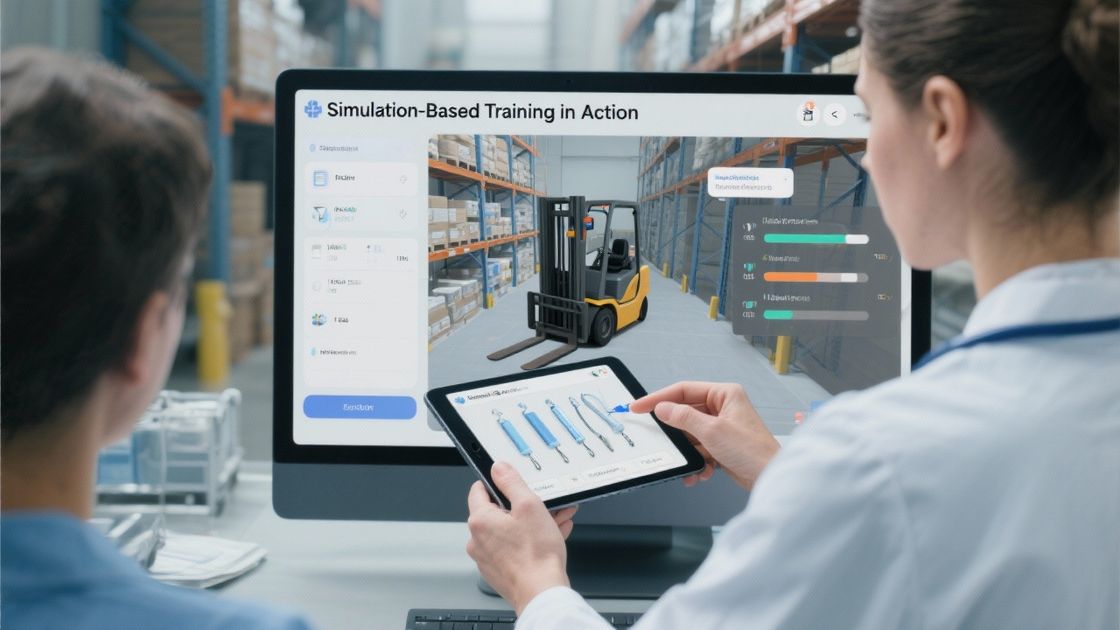
Gamified simulations let people make mistakes safely. A logistics company built a warehouse management simulator. New forklift operators practised picking orders. They crashed into things. They made terrible routing decisions. They learned from failure without damaging real equipment or disrupting operations.
The simulation compressed months of careful practise into weeks of aggressive trial and error. New operators reached competence faster because they could fail freely. The company reduced training time by 40% whilst improving safety outcomes.
Making Tedious Processes Transparent
Some business processes are genuinely tedious. Data entry. Quality control checks. Inventory counts. These tasks matter enormously. They rarely feel engaging.
Game mechanics can make progress visible. They can show people how their tedious work contributes to larger outcomes.
A manufacturing company needed accurate inventory counts. Staff found the work tedious and rushed through counts. Accuracy suffered. The company built a simple system showing how inventory accuracy affected production scheduling. Each accurate count contributed to smoother production runs. Staff could see the impact of their work.
This approach makes the connection between tedious work and meaningful outcomes obvious. Engagement improved because people understood why their work mattered.
Sales Training That Builds Real Skills
Role-playing sales scenarios often feels awkward. People know they're pretending. They act unnaturally. Everyone leaves uncomfortable.
A software company built a simulation where sales reps practised difficult conversations. The system presented realistic customer objections. Reps practised their responses. The simulation tracked which objection handling techniques worked best.
The artificial nature of the simulation removed embarrassment. Reps could try bold approaches without fear of judgement. They could practise the same scenario repeatedly with different strategies. Performance in real sales calls improved measurably.
The game mechanics solved a specific problem. Sales reps needed practise with difficult conversations. Traditional role-play created too much awkwardness to be effective. The simulation provided a comfortable space to develop genuine skills.
The Implementation Reality
Building effective gamified systems requires real investment. Simple point systems take weeks. Complex simulations take months. Budget five to thirty thousand pounds depending on sophistication.
You need clear metrics before starting. What specific outcome are you trying to improve? How will you measure success? What does a 20% improvement actually mean for your business?
Start with a clear problem statement. Identify exactly what you want to change and why game mechanics might help.
When Points and Badges Add Value
Recognition matters in the right contexts. Customer service teams benefit from visible acknowledgement of excellent work. Points and badges can provide that recognition when implemented carefully.
Connect recognition to genuine achievement. Badge systems work when they highlight real skill development.
A support team built a certification system. Staff earned badges for mastering different product areas. The badges represented genuine expertise. Customers could see which agents had deep knowledge of specific topics. The badges helped direct complex problems to qualified staff.
This worked because badges communicated useful information. They told customers and colleagues something real about capabilities.
Measuring Actual Impact
Track the business metric you care about. Training completion rates tell you little. Measure whether people actually apply what they learned. Look at error rates. Check performance outcomes. Count customer complaints.
Compare gamified processes against non-gamified controls. Some companies see dramatic improvements. Others see modest change. The difference usually comes down to whether the game mechanics addressed a real problem.
Expect a three to six month timeline before seeing meaningful results. People need time to engage with new systems. Early metrics will look confusing. Give the system time to show its value.
The Cultural Dimension
Some workplaces embrace gamification naturally. Others find it juvenile. Know your organisation. A manufacturing floor might love competition and visible progress tracking. A law firm might prefer different approaches.
Test with small groups first. Let people opt in. See who engages naturally. Build on success and expand thoughtfully.
Resistance often comes from poor implementation. When gamification feels like surveillance dressed up as fun, people resist. When it genuinely helps them do their jobs better, adoption happens naturally.
Making the Decision
Ask whether you have a specific problem that game mechanics might solve. Training for infrequent complex tasks. Practise for high-stakes situations. Making progress visible in tedious work. Providing recognition for genuine achievement.
Articulate the specific problem clearly. Then consider whether game mechanics offer a practical solution.
Start small when you see an opportunity. Build a focused solution for one team or one process. Measure results carefully. Expand when you see genuine improvement.
Game mechanics are tools for specific problems. They work best when applied surgically to situations where feedback loops and visible progress genuinely help.
Success comes from identifying the narrow situations where game mechanics provide real value. Find those situations in your organisation. Build focused solutions. Measure outcomes honestly.
Your employees need systems that help them do their jobs better. Sometimes game mechanics provide that help. Applied thoughtfully to the right problems, they can deliver measurable improvements in performance and engagement.