
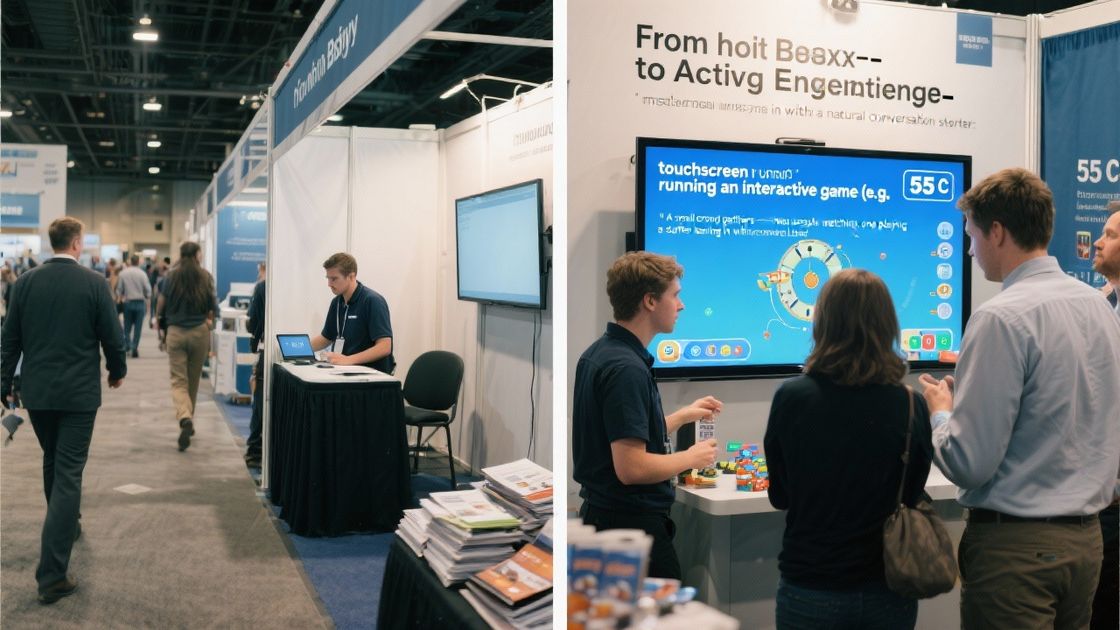
Trade show booths blur together after the first hour. Hundreds of companies compete for attention with the same tired tactics and your expensive booth space sits empty while prospects walk straight past.
Custom games break this pattern completely. They stop foot traffic. They hold attention long enough for proper qualification. They make lead capture feel natural and the contacts you gather actually convert.
Why Traditional Booth Tactics Struggle
Standing there looking hopeful doesn't work. Active grabbing feels pushy. People avoid eye contact. They speed up as they approach your space. You end the day exhausted with a handful of contacts who may never respond.
Giveaways attract people who want free merchandise. They stop for the pen or tote bag. They vanish immediately after collecting it. Your stack of business cards represents people who wanted swag.
Demonstrations require commitment. Prospects must stop and watch for several minutes. Most won't because they have places to be. They can't justify ten minutes on something they might not need. Your demo runs to an empty booth whilst qualified prospects walk past.
What Makes Games Different
Games create curiosity. People see others playing and want to know what's happening. They stop to watch. Watching leads to playing. Playing leads to conversations.
The game holds attention. Someone playing a three minute game gives you three minutes of their time. They stay in your booth space. They engage with your brand. Your staff can observe and identify genuine prospects whilst they play.
Lead capture becomes natural. Players want to see their score. They want to compare results. They provide contact details willingly to get their results emailed. No awkward business card requests.
Types That Actually Work
Product knowledge quizzes make sense for complex offerings. Players answer questions about industry challenges. The questions reveal whether they understand problems your product solves. High scores indicate sophisticated prospects worth pursuing.
A software company selling project management tools built a quiz about common project failures. Questions covered resource allocation, deadline management and stakeholder communication. High scorers clearly dealt with these issues regularly. They became hot leads automatically.
Interactive product demonstrations disguised as games work brilliantly. Players manipulate variables and see outcomes. They learn your product capabilities whilst enjoying the interaction. Educational value makes them remember your company.
A manufacturing equipment supplier created a production line optimisation game. Players adjusted machine settings to maximise output. The game taught their equipment's capabilities whilst entertaining. Prospects left understanding exactly what the equipment could do.
Leaderboard competitions create ongoing engagement. The top scorer each hour wins a prize. People return multiple times to check standings. Each return gives your staff another chance to qualify them. The game extends booth engagement across the entire show.
Technical Requirements
Large touchscreens work best. 55 inches minimum. People need to see the game from a distance. Small tablets don't create the stopping power you need. The display must be visible from the aisle.
The game must load instantly. Trade show wifi performs unpredictably. Build games that run entirely in the browser without external dependencies. Loading delays kill engagement. People won't wait.
Mobile compatibility matters for follow up. Email players a link to replay the game. They can show colleagues. They remember your company. The game becomes a post show marketing asset.
Simple mechanics are essential. People must understand the game within ten seconds. Complex rules mean people walk away. Your target is someone who has never played before figuring it out immediately.
Lead Qualification Built In
The game should reveal buying signals through gameplay choices. Track which features players explore. See which scenarios they test. This behaviour tells you what they care about.
Questions during gameplay qualify prospects naturally. Ask about company size whilst they play. Inquire about current solutions between levels. The gaming context makes questions feel less intrusive.
Scores correlate to qualification level when designed properly. A logistics game where players solve routing problems will score experienced logistics managers higher than curious passers by. High scores indicate domain expertise.
Your CRM gets better data than traditional badge scanning. You capture engagement level. You know which product features interested them. You have conversation starters for follow up that reference specific gameplay moments.
Investment Reality
Game development runs five thousand to twenty thousand pounds depending on complexity. Simple quiz games cost less. Interactive simulations cost more. Touchscreen rental adds eight hundred to two thousand pounds per show depending on size and quality.
Compare this to other booth attraction methods. Professional demonstrations need staff time and equipment. Video walls cost similar money. Giveaways accumulate expense across multiple shows. Games work repeatedly.
One game serves multiple shows. You use it repeatedly. The per show cost drops dramatically after the first few events. A company doing six shows annually spreads development costs across all six.
Measuring Success
Track booth visitors who engage with the game compared to total foot traffic past your booth. Good games capture 15% to 30% of people who walk past. That conversion from passerby to engaged prospect matters enormously.
Count qualified leads generated per show. Define qualification criteria clearly. Compare game generated leads to previous shows using traditional methods. Most companies see 40% to 80% more qualified contacts.
Measure post show conversion rates. Game engaged leads convert to sales meetings at higher rates. They remember your company. They enjoyed the interaction. They respond to follow up emails.
Calculate cost per qualified lead. Divide total show investment by qualified leads captured. Compare across shows and tactics. Games typically improve this number substantially.
Common Pitfalls to Avoid
Making games too difficult reduces engagement. People give up and leave frustrated. Your game should be challenging enough to be interesting and achievable for someone trying for the first time.
Neglecting the follow up wastes the leads you capture. Email players within 24 hours. Reference their gameplay. Provide relevant information based on what the game revealed about their needs. The game creates the opportunity. Follow up converts it.
Forcing people to play damages results. Some prospects want traditional conversations. Read the room. Offer the game and respect their preference. Your staff must balance gaming and traditional engagement.
Weak branding integration wastes the awareness opportunity. The game should clearly connect to your product or service. Generic games entertain. Branded games educate and build recognition. Make the connection obvious.
Staff Training Matters
Your booth staff need to understand how to use the game effectively. They should know when to suggest it. They must learn which gameplay behaviours indicate strong prospects. They need conversation starters that reference game elements.
The game creates opportunities and staff must capitalise on them. Train people to observe gameplay. Teach them to identify the moment when a player becomes genuinely curious. That moment is when real qualification conversations begin.
Some staff prefer traditional approaches. Get buy in before the show. Demonstrate how games make their job easier. Show them the qualification data games provide.
When Games Make Sense
Large shows with heavy foot traffic justify the investment. Hundreds of companies competing for attention and games create clear differentiation. You need stopping power.
Complex products benefit enormously. When your offering takes explaining, games provide engaging education. Prospects learn whilst playing. They arrive at sales conversations already understanding basics.
Multiple annual shows spread development costs effectively. One game works repeatedly. You refine it based on results. It becomes more effective with each show.
When Traditional Approaches Work Better
Small shows with limited traffic don't need games. Everyone stops at every booth anyway. Traditional demonstrations and conversations work fine. Keep it simple.
Simple products with obvious value propositions see less benefit. If someone understands your offering in 30 seconds, games add complexity without proportional value. Focus on clear communication.
Very conservative industries move slowly on interactive tactics. Know your audience. Some sectors embrace games enthusiastically. Others find them unprofessional. Research your specific trade show culture.
Implementation Timeline
Plan four months ahead minimum. Game development takes six to ten weeks. Testing needs two weeks. Staff training takes time. Touchscreen procurement and logistics need advance planning.
Brief developers thoroughly. Explain your product. Describe your typical customer. Share qualification criteria. The better developers understand your business, the more effective the game becomes.
Test with real people before the show. Watch them play. See where they get confused. Adjust difficulty. Refine instructions. Every minute spent testing prevents booth problems.
Making the Decision
Calculate your typical trade show ROI. Count qualified leads. Estimate conversion value. Work out cost per lead. Now estimate what a 50% increase in qualified leads would mean for revenue.
If that number justifies the game development investment, move forward. If it doesn't, stick with traditional tactics. The mathematics must work for your specific situation.
Trade show games solve specific problems. Booths that struggle with foot traffic. Companies with complex offerings. Organisations doing multiple shows annually. These situations favour game based approaches.
Your booth gets lost amongst hundreds of competitors because it looks like every other booth. Games make you visibly different. People stop. They engage. They remember you. The leads you capture convert because they actually experienced your brand.
Know which tactics serve your situation best. Make decisions based on your actual trade show performance and objectives. Games transform lead generation when applied to the right challenges at the right events.